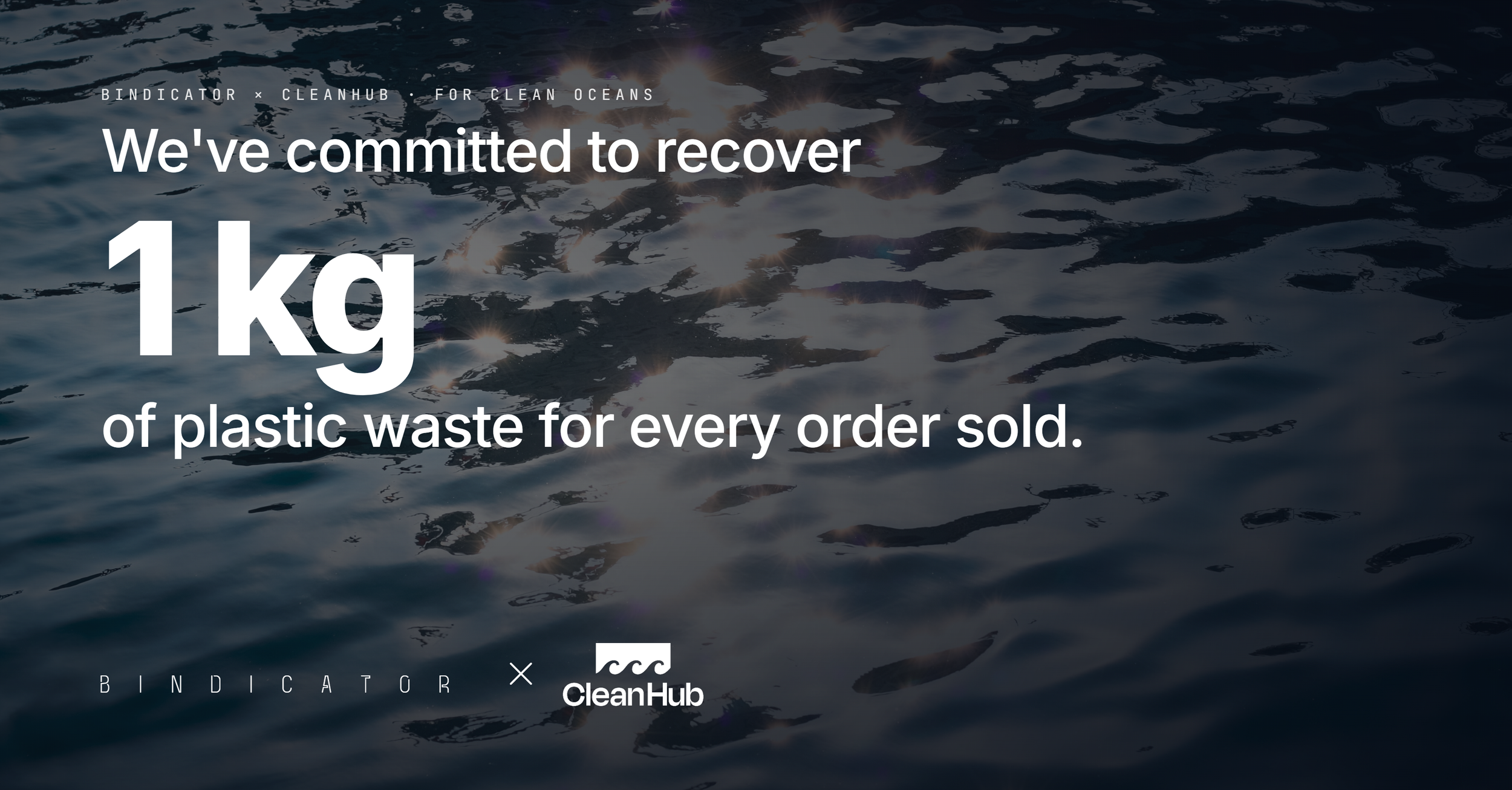
For every Bindicator sold, 1kg of plastic comes out of the environment
We've partnered with CleanHub. Here's what that actually means, why we did it, and how you can track the impact.
Why we did this
Bindicator exists to help households put the right bin out on the right night. It's a tiny problem, but solving it well has a real downstream effect. It means fewer contaminated recycling loads, less general waste sent to landfill because the recycling truck rejected the bin, and fewer of those weeks where you forget entirely and a fortnight's rubbish piles up.
But there's a limit to what a single product on a single bench can do. Most of the world's plastic problem isn't a kerbside-sorting problem. It's an infrastructure problem. There’s also the issue that Bindicator in itself is creating a plastic product. We’ve designed it to last as long as possible, but there’s a time when the Bindicator itself will end up in landfill, and we wanted to make sure that the overall result is positive.
More than 2 billion people globally don't have access to any waste collection at all. The result is that around 11–14 million tonnes of plastic ends up in the ocean every year, and a huge amount of that comes from coastal communities where there's simply no system in place to manage it.
We wanted to do something tangible about that, and CleanHub is how we're doing it.
What CleanHub Actually Does
CleanHub is a German-based organisation that funds plastic waste collection in coastal communities across Asia, Africa and Latin America. These are the regions where plastic is most likely to enter the ocean. They work in places like Indonesia, India and Tanzania, where formal waste management infrastructure either doesn't exist or doesn't reach most households.
The way it works is straightforward:
Local hubs do the collection. CleanHub partners with local waste organisations or builds collection centres from scratch, and pays workers fair wages to collect plastic door-to-door, off beaches, and out of rivers. The jobs created are formal, safe, and audited against international labour standards.
Every kilogram is tracked. Each piece of collected plastic is weighed, photographed, and digitally logged. The system is the first plastic credit programme in the world to be independently verified by TÜV SÜD under the ISO 14064-3:2020 standard. You can watch the live data feed on their dashboard. Every piece of plastic is audited to ensure that no part of the process involves greenwashing.
The plastic doesn't go back to landfill. Recyclable plastic is sold into local recycling streams. Non-recyclable plastic, which is most of what ends up in oceans because it's the multi-layer flexible stuff like food wrappers and sachets is used as alternative fuel in cement production - replacing coal and gas. It’s not a perfect solution, but a meaningful one given the alternatives are open burning, dumping, or letting it wash into the sea.
CleanHub is a certified B Corp, a member of the UN Business Coalition on the Plastic Treaty, and part of the Prevent Waste Alliance. None of that guarantees perfection, but it does mean independent eyes are on what they do.
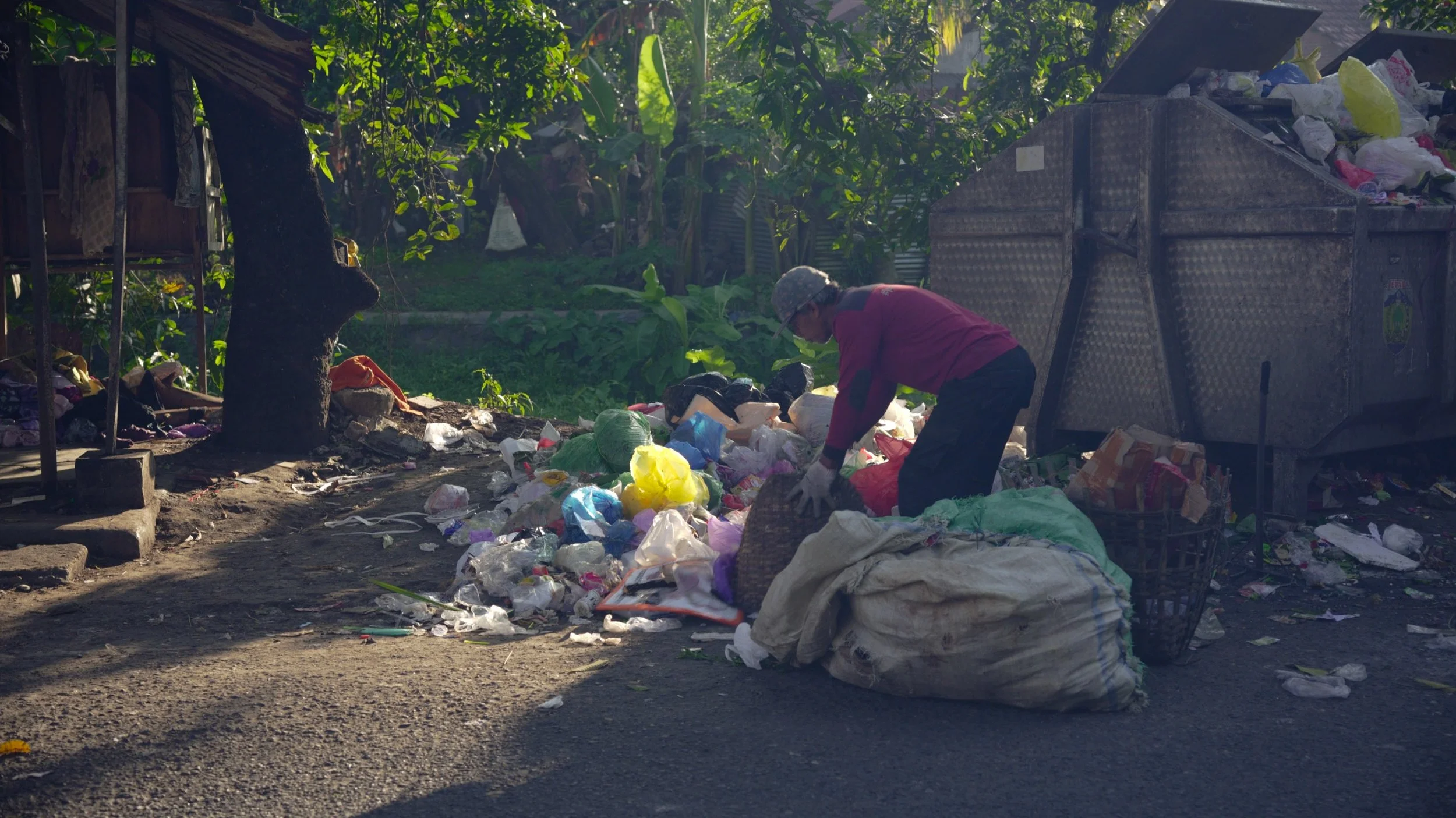
CleanHub Jepara (Source: CleanHub)
To be Honest
Bindicator is not Patagonia, it’s a small Australian brand selling a handful of fun little lights. We can't restructure global supply chains. What we can do is make sure that buying our product has a measurable, real-world environmental upside attached to it beyond the upside of just helping you recycle better at home.
A few things we want to be straight about:
This isn't an excuse to make more plastic. Bindicator's product is mostly silicone and electronics, and we're working through what we can change in our own packaging and components. Plastic recovery is additional to that work, not a substitute for it.
1 kg per product isn't proportional to the product's plastic footprint. Our product contains around 100g of plastic. We chose the 1 kg figure because it represents meaningful recovery above and beyond a symbolic gesture. We think the maths should land net-positive, and the more Bindicators we sell the more that net positive impact grows.
How to follow the impact
If you want to actually watch this work happen rather than take our word for it, here are the live links:
Bindicator's impact dashboard:cleanhub.com/impact-report/bindicator
CleanHub's global live feed:cleanhub.com/live-dashboard (real-time collection events from every hub worldwide)
The technology behind it:cleanhub.com/our-technology
The dashboard updates as collections happen on the ground. As we sell more units, you'll see the kilograms tick up. We'll share milestone updates here on the blog and on Instagram (@bindicator_lamp). We couldn’t be more excited to hit that first Tonne milestone.
Bindicator is an Australian-owned small business. We make a colour-changing kitchen light that tells your household which bin goes out tomorrow. Shop now →